1. Open and stock
Before the rushFill the shelves first. This is the only work with no time pressure attached, and every item you shelve now is attention you get to spend at the counter later.
Sources: In-game
A shift in Shift At Midnight is short, randomly generated and unforgiving in a delayed way. This walkthrough covers the order to do things in, where the time actually goes, and the decisions that determine whether anything is waiting for you when the night ends.
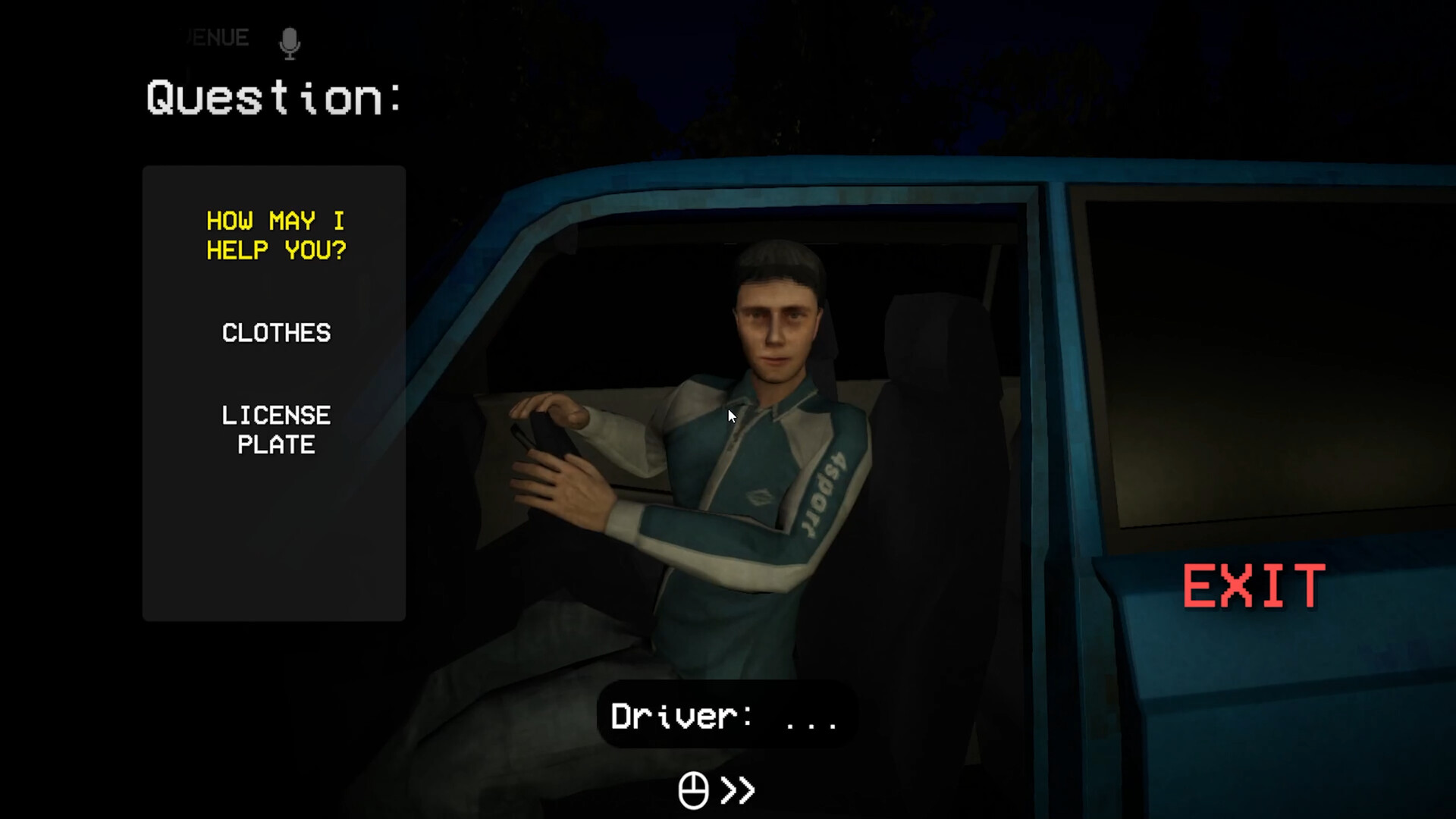
Fill the shelves first. This is the only work with no time pressure attached, and every item you shelve now is attention you get to spend at the counter later.
Sources: In-game
In a three-player run, one person owns the register and does not leave it. The other two cover restocking, deliveries and cleaning. Rotating the register between players is how details get missed.
Sources: In-game
Pack the items, scan the ID, compare the database photo to the person, then question them about the identity they presented. Complete the sale only when both checks agree.
Sources: In-game
Shoot a confirmed impostor at the counter. Expect a wounded one to run — follow up, or aim for the head to end it in one. Then clean up what is left before it costs you more time.
Sources: In-game
Deliveries arrive during the shift and mess accumulates. Whoever is not on the register absorbs all of it, because falling behind the quota pressures the register into going faster.
Sources: Steam store description
If nothing got through, the shift ends. If something did, the Entity arrives — and the response is barricades, traps and hiding rather than a fight you can win at the counter.
Sources: In-game
There is no fixed level layout to memorise in Shift At Midnight. Shifts are randomly generated, so a walkthrough here means the order of operations that survives the most nights, not a route.
The single biggest mistake in a first run is treating all the shop tasks as equally urgent. They are not.
Shelf stocking has no deadline attached — it just needs to be done before customers want the goods. Deliveries arrive when they arrive. Cleaning can wait a few minutes. Screening cannot wait at all, because a customer standing at the register is a decision being made whether you are ready or not.
So do the deadline-free work early and aggressively, before the first arrivals. Every shelf filled during the quiet stretch is a shelf you are not filling while someone is waiting at the counter with an ID you have not properly looked at.
In co-op, the strongest structure is the least flexible one: one player owns the register for the whole shift and does nothing else.
The reason is that screening quality degrades when interrupted, and the cost of degradation is invisible until the end of the night. A player who is restocking between customers will process someone faster than they should. They will get away with it most times. The time they do not, nobody finds out until the Entity arrives.
For each customer:
Players describe a further tool used across this sequence, which reports what the customer is feeling rather than what they are saying. The game has never given it a name, so this page has never had one to use for it — what it does and who has documented it is worth reading before you rely on it, because the confident guides and the checkable evidence part company. Run it after the ID rather than before: an emotion is only information once you have the record the database holds on that person to measure it against.
If you shoot a genuine person, that is what happened, and the shift continues around it.
If you let an impostor through, nothing visible occurs. It leaves, alerts the Entity, and the bill arrives at the end of the night. At that point the game changes shape: board up the doors, set traps, hide. Surviving that is possible, but it is the losing branch — the winning play is not reaching it.
The game’s own name for that sequence is a Hunt, and two achievements track it: one for surviving your first, one for finishing a Hunt inside thirty seconds. The second is held by 44.8% of owners against 93.4% for the first, which makes the gap between them the clearest difficulty marker the game publishes. Both sit in the full achievement list with unlock rates.
A Hunt is also where the enemies the game bothers to name turn up, and only one of those has ever been mentioned by the developer outside that achievement list. What is on the record about it, and how much of the advice in circulation rests on a single source, is set out in the Marionette and its music box.
A single night, structured around a sales quota rather than a clock you can ignore. Shifts are randomly generated, so the customer volume and the number of impostors vary between runs.
Stock the shelves before the first customers arrive. Shelf work is the one task that can be done entirely on your own schedule, and doing it early buys the attention you will need at the register later.
Put one player on the register permanently and let the others handle shelves, deliveries and cleaning. The screening is the only task where being rushed causes real damage, so it should be the task that is never rushed.
If every doppelganger was caught, the shift closes normally. If one got past you, it alerted the Entity, and the Entity arrives at the store as the shift ends.
When the night turns, the game moves from serving customers to survival — boarding up doors, setting traps and hiding. Avoiding that state by screening correctly is far more reliable than handling it once it starts.